Selected work
Our experiences shape the services we use; our communities respond to economic and political trends and evolve. For every policy, regulation or a new service there is a backstory that often involves a broad number of collective and individual experiences.
I seek lived experiences, always.


access to treatment
I used the Asset-Based Community Development method to co-design a service called META (known as METRO). It was a response to systemic denial of access to ultimately life-saving interventions such as detox. The pilot project was specifically designed to work and support Polish rough sleepers with substance misuse issues to move off the streets and re-connect with one’s health by following METRO principles – Multiagency, Engagement and Treatment Reconnection Offer. The project was co-designed with people with support needs and sleeping rough to understand their strengths and capabilities to move off the streets.
It resulted in over 40 people accessing alcohol and drug detox in the UK followed by long term rehabilitation programmes in Poland. The model has been recognised by Greater London Authority and informed a proposal for a new service supporting mobile EU citizens in accessing treatment and supported housing. I implemented the model in pan-London service and continued building working partnerships in other EU countries.
choose recovery

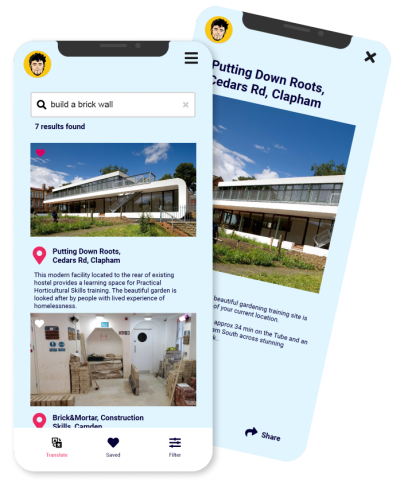
I led 3 months service development project with objectives to gather evidence from key stakeholders about barriers and enablers to referral and retention in Horticultural and Construction Skills services and to draw out trends and insights to make recommendations for changes which would increase enrollment and retention.
I used qualitative research methods and service design methods to map out key stakeholders, understand clients’ experience of service, and their unique journeys. I interviewed 67 stakeholders.
I organised the findings in a written report as well as designed visual aids for people living in hostels. The report was presented to Exec Directors and implementation plan developed with service managers helped to set up a Community Hub in South London. The insights report informed relevant teams on internal communication strategies (#feelconnected), recommended methods of engagement and tools to facilitate on-boarding and off-boarding process.
solidarity in action
I developed co-productive approach for a charity working with people with experience of homelessness to implement a range of new Solidarity Initiatives. Discovery phase included desk research, qualitative interviews with local authority’s Welfare Rights, Housing Inclusion and Employability teams, local charities and businesses. I run carefully planned co-design workshops locally and at Annual National Assembly.
With a group of over 40 staff, trustees, and people with experience of homelessness, my team and I provided a safe space for producing both new ideas and sharing experiences and knowledge of existing solidarity initiatives. Based on the outcome of Discovery phase I developed implementation plan for new initiatives, including communication and fundraising strategy, recruitment and line management of Community Outreach Workers.
supporting people with experience of migration and homelessness
Between 2016-2022 I managed Street Legal service and the Greater London Authority funded Routes Home Service. During my time at Street Legal and Routes Home, I have continued my passion for innovation and partnership working, developing partnerships in the UK and abroad with a range of immigration advice organisation, drug and alcohol services, hosting schemes, organisations offering support with basic living expenses for people with unclear or limited entitlements, access to mental health treatment, etc. During the pandemic, I and my team played a pivotal role in developing a system of immigration advice provision for the pan-London „Everyone In” emergency hotels. Working closely with the GLA, immigration advice organisations and emergency hotel providers, I supported the delivery of immigration advice to hundreds of people accommodated in emergency hotels.